IBM Says It’s Ready to Scale Quantum Computing
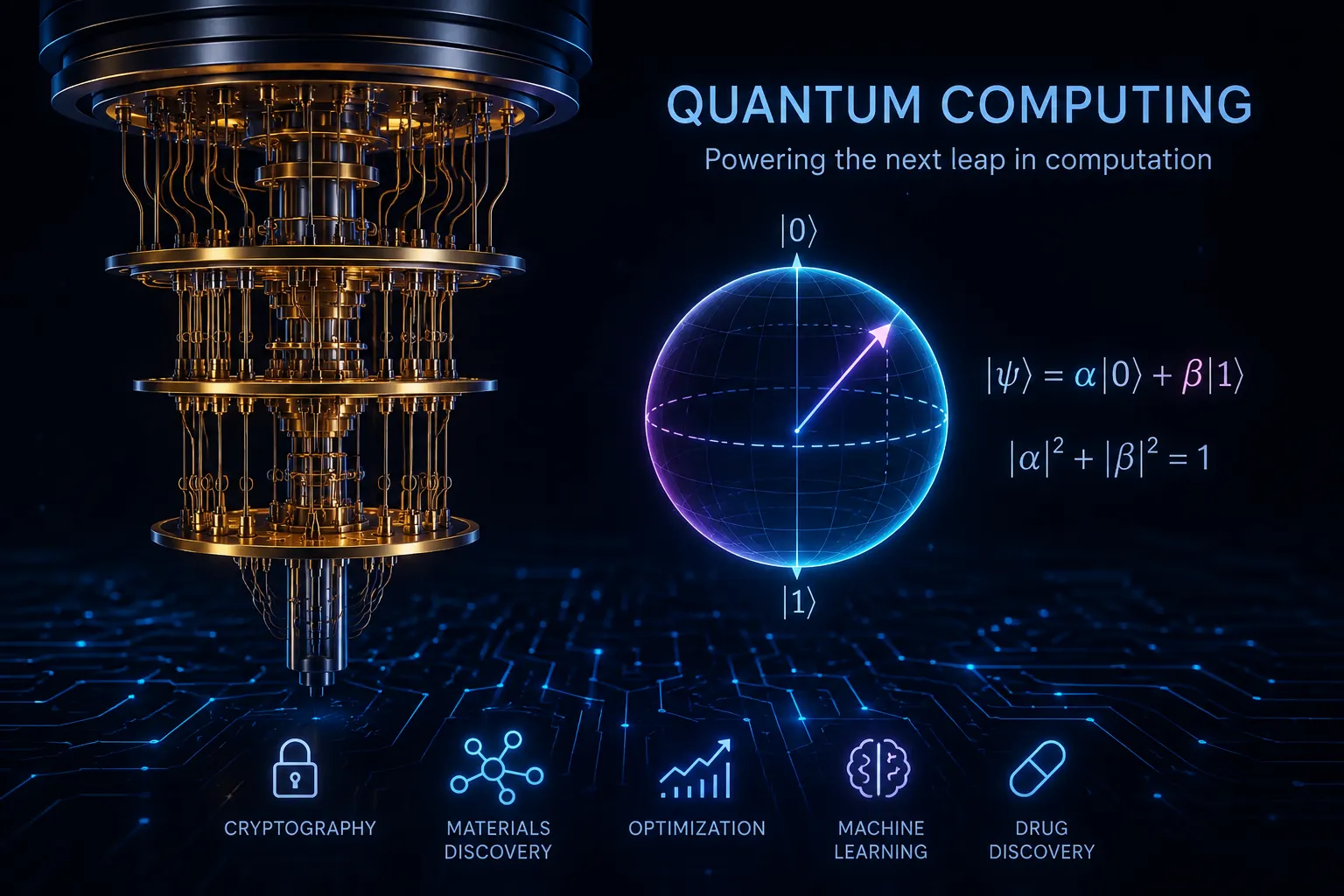
This is the next post in my Post-Quantum Cryptography Series.
I recently saw an IBM announcement referenced on Hacker News.
This post focuses on comments IBM has made, but they are hardly the only player actively researching quantum computing.
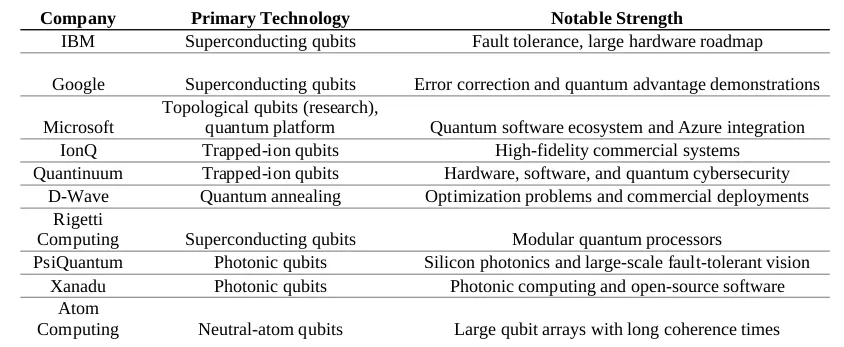
Companies Actively Engaged in Quantum Computing Research
There’s also ongoing efforts in academia and government labs making progress.
For years, quantum computing has occupied a strange position in technology discussions.
It is simultaneously:
- Revolutionary
- Incredibly promising
- Perpetually, five-to-ten years away (like fusion power, asteroid mining, and the better chicken strip).
Every few months, a company announces a new qubit count, a faster processor, or a breakthrough experiment. The headlines proclaim that the quantum future has arrived, while practical applications remain limited.
IBM believes that narrative is beginning to change — here’s to hoping.
Recent statements from IBM executives indicate the company is shifting its focus from simply building larger quantum systems to scaling quantum computing into practical, fault-tolerant machines capable of solving real-world problems. The company remains committed to delivering a large-scale fault-tolerant quantum computer, known as IBM Quantum Starling, by 2029.
The Problem Isn’t More Qubits
When most people hear about quantum computing, they hear about qubit counts.
- 100 qubits.
- 1,000 qubits.
- 10,000 qubits.
It sounds similar to the way we discuss CPU cores or memory in traditional computing. Unfortunately, quantum computing is not that simple.
Today’s quantum computers are “noisy”.
Qubits are extraordinarily fragile and easily disturbed by their environment. Small errors accumulate rapidly, making it difficult to perform long, complex calculations reliably. This is why much of the industry’s effort has shifted toward quantum error correction and fault tolerance rather than simply increasing the number of qubits. A million unreliable qubits are often less useful than a smaller number of reliable qubits.
Scaling Quantum Computing
When IBM talks about scaling quantum computing, it is referring to several related challenges.
Building Larger System
Quantum computers must eventually grow beyond today’s experimental devices.
IBM’s roadmap includes increasingly connected quantum processors and modular architectures that can be linked together into larger systems.
Reducing Error Rates
A useful quantum computer must produce correct results consistently.
IBM has spent significant effort developing new architectures and error-correction techniques that reduce the enormous overhead traditionally associated with fault-tolerant quantum computing.
Integrating Classical and Quantum Computing
The future likely isn’t quantum computers replacing traditional computers.
Instead, IBM envisions “quantum-centric supercomputing,” where CPUs, GPUs, and quantum processors work together to solve problems that none could efficiently solve alone.
The quantum industry has reached an interesting milestone.
The conversation is gradually moving away from can-we-build-quantum computers? toward how-do-we-scale-them?
IBM has publicly stated that it expects to demonstrate early examples of its quantum advantage in practical applications while continuing its path toward fault-tolerant systems. The company has also committed more than $10 billion toward quantum development over the next five years (this post was published in Q2, 2026).
That level of investment suggests IBM sees quantum computing as a long-term strategic business rather than merely a research project.
Governments Are Paying Attention Too
IBM’s announcement arrives at a time when governments are increasingly focused on quantum technologies.
The U.S. government recently issued executive actions related to both quantum computing development and the Post-Quantum Cryptography (PQC)migration. Public-private investments are also supporting quantum manufacturing and infrastructure efforts intended to accelerate commercialization.
This growing government involvement reflects a broader recognition that quantum computing may eventually have significant implications for:
- National security
- Scientific research
- Drug discovery
- Materials science
- Financial modeling
- Cryptography
The Post-Quantum Connection
One reason cybersecurity professionals are paying close attention is that large-scale quantum computers could eventually threaten many of today’s public-key (asymmetric) cryptographic systems.
Algorithms such as RSA and Elliptic Curve Cryptography rely on mathematical problems that are believed to be difficult for classical computers but could become tractable for sufficiently powerful quantum machines.
Ironically, the same technology that could revolutionize chemistry and materials science is also the technology driving the global transition toward post-quantum cryptography.
This is why governments and enterprises are simultaneously investing in quantum computing and preparing defenses against it.
Not Quite There Yet
Despite impressive progress, practical fault-tolerant quantum computers remain one of the most difficult engineering challenges ever attempted.
Current systems still face significant obstacles:
- Error correction overhead
- Hardware complexity
- Cooling requirements
- Scalability challenges
- Software ecosystem maturity
The industry is still in what many researchers describe as the Noisy Intermediate-Scale Quantum (NISQ) era, but the discussion is becoming less theoretical.
Instead of asking whether quantum computing is possible, the leading organizations are now discussing manufacturing capacity, deployment roadmaps, system architectures, and commercialization timelines.
These are the kinds of conversations that occur when a technology begins transitioning from laboratory curiosity to infrastructure.
Summary
IBM’s latest announcements are significant not because they prove quantum computing has arrived, but because they highlight how the industry is evolving. The focus is no longer merely on demonstrating isolated quantum experiments.
The focus is on:
- Scaling
- Building larger systems.
- Reducing errors.
- Creating practical applications.
- Integrating quantum processors into broader computing ecosystems.
Whether IBM ultimately meets its ambitious timelines remains to be seen, ut one thing is becoming increasingly clear, the quantum conversation is slowly shifting from science fiction to engineering.
And, engineering is where technologies become real.
Notes
- AI / GenAI / ChatGPT / etc were not used to generate the text of this article.
- ChatGPT was used to generate the images.
- I used em dashes in my writing before the current GenAI wave was a thing. Not planning on changing now.
- Names have been changed to protect the guilty.
- None of the hostnames or users used in examples actually exist.
- Feel free to post any comments or suggestions below.
Originally published on Medium.