AI / LLM Software Security: Part 3
This is the third post in my “AI / LLM Software Security Series”.
Read article: AI / LLM Software Security: Part 3111 articles tagged Security.
This is the third post in my “AI / LLM Software Security Series”.
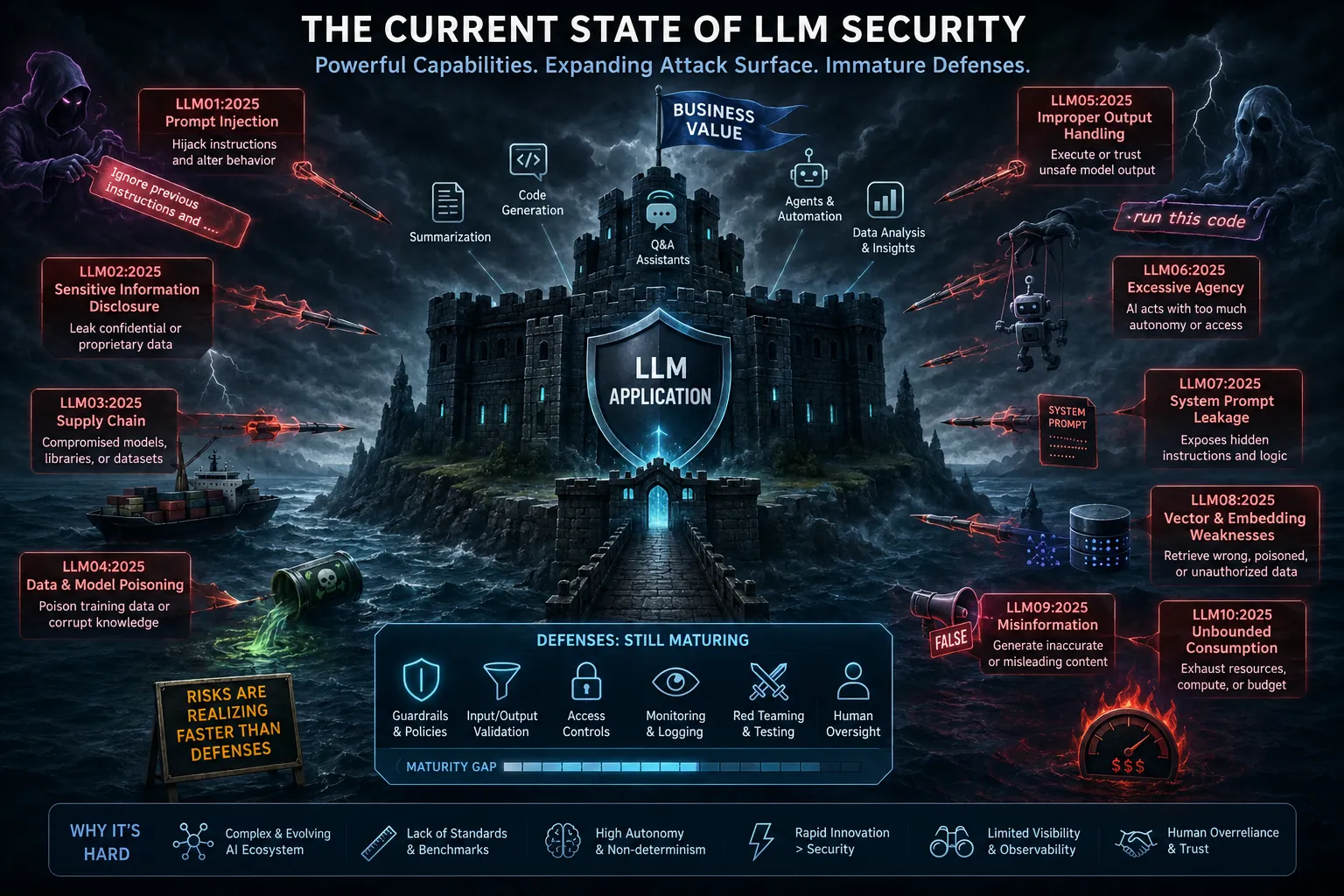
Read article: AI / LLM Software Security: Part 3This series explores the “OWASP Top 10 for LLM Applications 2025” issues.
Read article: AI / LLM Software Security SeriesThis is the second post in my “AI / LLM Software Security Series”.
Read article: AI / LLM Software Security: Part 2The most common reaction to that image has been, “WTF?” I decided to go with it and use the image as originally generated.
Read article: AWS Outposts Migration Security Considerations: Part 2AWS Outposts moves the AWS cloud services into your onprem data center. It is a hybrid-cloud platform from Amazon Web Services that extends AWS infrastructure and services into your own datacenter, colocation facility, etc. With AWS Outposts, AWS ships you AWS-designed racks with pre-configured…
Read article: AWS Outposts Migration Security Considerations: Part 1This is the first post in my “AI / LLM Software Security Series”.
Read article: AI / LLM Application Software Security: Part 1Multi-Factor Authentication (MFA) is the security control that can make, or break, your business. If there’s one cybersecurity control that consistently separates organizations that get breached from those that don’t, it’s Multi-Factor Authentication (or, to be precise, MFA, done correctly).
Read article: Multi-Factor Authentication (MFA): Don’t Let Your CyberSecurity Insurance Claim Get Denied On…IntroductionWhat Does Cashless Mean?Countries Embracing Going CashlessWhy Cashless Advocates Dislike Cash
Read article: Dangers of a Cashless SocietyA starting point for application security.
Read article: Application Security Best Practices“Defense in Depth” is the idea that no single security control is trusted to stop an attack. Instead, you stack multiple, independent layers so that if one fails, others still stand in the way.
Read article: Defense In Depth